 India
India
 World
World
 Entertainment
 Sports
 Chhattisgarh
 Haryana
 Delhi
Delhi
 Religious
 Business
 Tech & Auto
 Education
 Health
 Andhra Pradesh
 Telangana
 Sikkim
 Odisha
 Jharkhand
 Assam
Assam
 Nagaland
IIT Indore Researchers Achieve Major Breakthrough
Early Detection of Oral Cancer Possible Using Saliva and Swabs
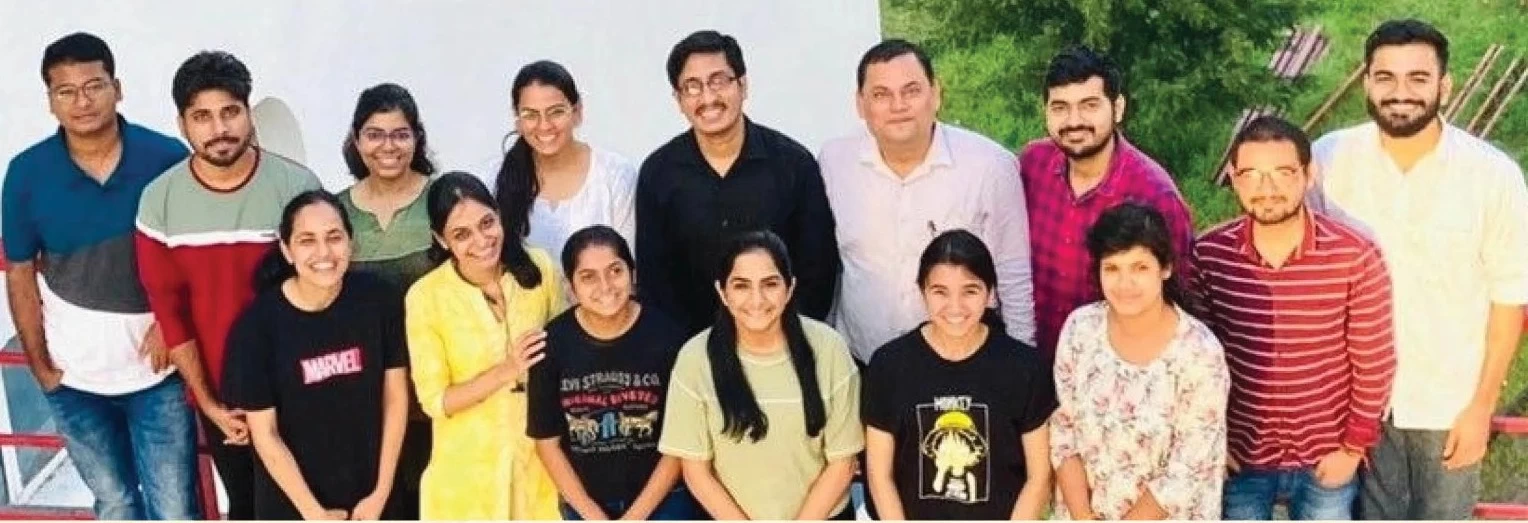
Indore, Early detection of oral cancer may now be easier and less painful. Researchers at IIT Indore have developed a non-invasive testing method that can detect early signs of oral cancer using only saliva and a simple swab taken from inside the mouth. This technology could prove particularly useful in routine monitoring of people at high risk for oral cancer.
Currently, biopsy is considered the standard test for confirming oral cancer. This requires tissue sampling, making it unpractical to perform it repeatedly. Researchers believe this new technology could be a significant step toward addressing this challenge.
Pre-cancerous changes will also be detected
The research, led by Professor Hem Chandra Jha of the Mehta Family School of Biosciences and Biomedical Engineering and conducted in collaboration with Dr. Tarun Prakash Verma, also included Dr. Deepak Agarwal of the Government College of Dentistry, Indore.
The research focused specifically on oral squamous cell carcinoma and oral submucous fibrosis. Oral submucous fibrosis is a condition often associated with betel nut, gutkha, and tobacco consumption and can progress to cancer over time.
Saliva and swabs will reveal changes in the body.
According to the researchers, saliva contains many clues related to biochemical processes occurring within the mouth. Swabs taken from the inner surface of the mouth collect cells and proteins directly from the tissue.
The research team analyzed samples from healthy individuals, patients with oral submucous fibrosis, and patients with oral cancer using advanced techniques such as liquid chromatography-mass spectrometry. During this study, specific changes related to fat metabolism, energy management, oxidative stress, tissue repair, and immune activity were observed.
Significantly, some of these molecular changes were visible even before the disease became apparent. Combining saliva and swab results helped researchers understand the process of progression from healthy tissue to pre-cancerous state and then to cancer.
"Research aims to serve society"
Professor Suhas Joshi, Director of IIT Indore, said that the ultimate goal of research should be to serve society and people. According to him, this study takes advanced molecular science out of the laboratory and towards a simple and painless diagnostic process.
He said that if this technology is successfully developed further, it could facilitate early detection of oral cancer in normal patients.
It could help in regular monitoring of high-risk individuals.
The new technology is expected to provide benefits at many levels in the future. These include:
Identification of changes occurring at the molecular level before symptoms appear.
Assessing cancer risk in tobacco and gutkha users.
Monitoring high-risk patients without repeated biopsies.
Developing low-cost screening systems in rural and medically limited areas.
"A need for affordable and non-invasive technology"
Professor Hem Chandra Jha stated that oral cancer can emit molecular signals on saliva and the oral surface even before it becomes apparent. The research aims to translate these signals into practical tools that can enable early detection of pre-cancerous conditions and better patient monitoring.
According to the researchers, the technology's strengths are its non-invasive, cost-effective, rapid, and point-of-care capabilities. These features are even more important in a country like India, where access to specialized cancer screening facilities outside major cities is still limited.
Research published in the British Journal of Cancer
The findings of this research have been published in the British Journal of Cancer. A patent application for the technology has been filed and is under process.
The researchers are now preparing to validate these findings on a larger scale, involving different regions and larger numbers of patients. The goal is then to develop simple and targeted tests that could be incorporated into routine medical checkups in the future.