 India
India
 World
World
 Entertainment
 Sports
 Chhattisgarh
 Haryana
 Delhi
Delhi
 Religious
 Business
 Tech & Auto
 Education
 Health
 Andhra Pradesh
 Telangana
 Sikkim
 Odisha
 Jharkhand
 Assam
Assam
 Nagaland
Who was Padma Shri scientist Dr. Subanna Ayappan
Whose body was found in the river? He had an important role in the Blue Revolution
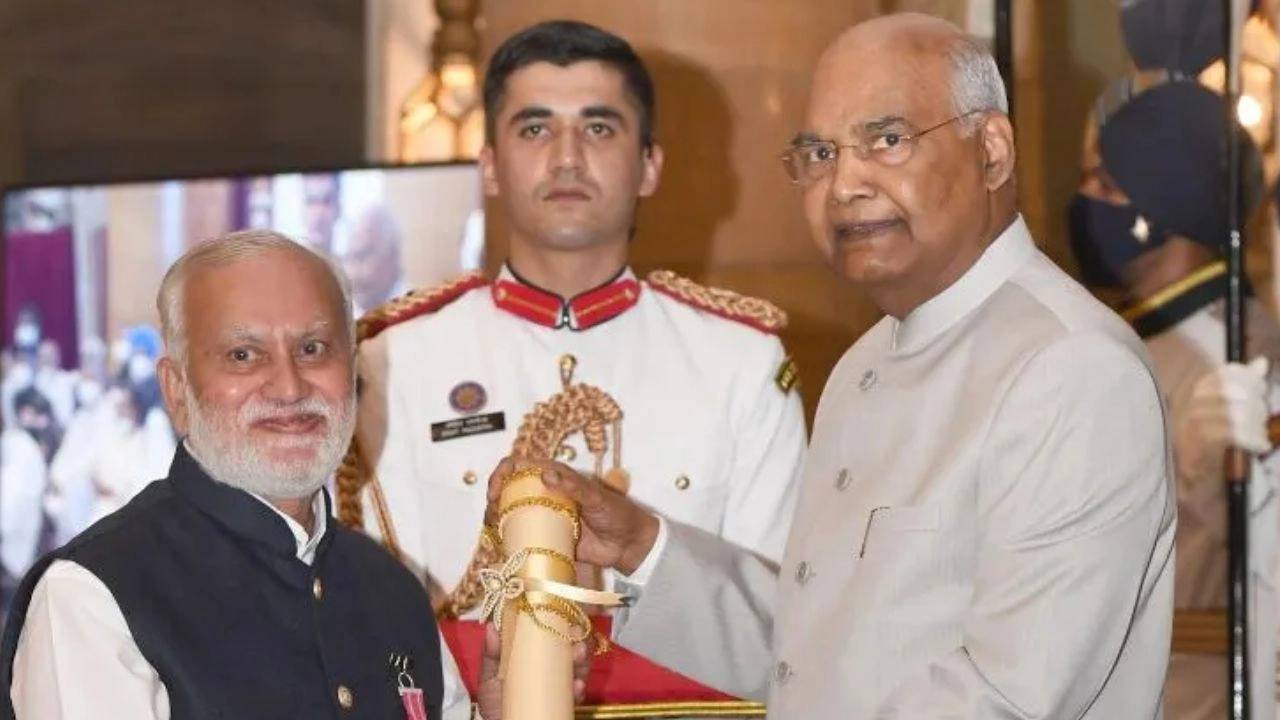
Famous agricultural scientist and Padma Shri awardee Dr. Subanna Ayappan (70 years old) has been found dead. His body was found in the Cauvery river near Sri Ashram in Srirangapatna. Subanna Ayappan's family includes his wife and two daughters. The cause of Ayappan's death is not yet clear, but it is believed that he committed suicide. Subanna Ayappan lived with his family in a house in Vishwashvara Nagar Industrial Area in Mysore. He was missing since May 7.
Police had received information about a body in the river
Srirangapatna police have registered a case and started investigating the matter. Police had received information about a body floating in the Cauvery river on Saturday. On receiving the information, the police reached the spot and got the body out of the river. The body was identified as that of renowned agricultural scientist and Padma Shri awardee Dr. Subanna Ayyapan. Ayyappan's scooter has also been recovered from the river bank.
Who was Subanna Ayyapan
Dr. Subanna Ayyapan was born on 10 December 1955 in Yalandur in Chamarajanagar district of Karnataka. He had obtained a bachelor's and master's degree in fisheries science. After this, he did his PhD from the Agricultural University of Bangalore. Dr. Subanna served in many important positions at the national level. He played an important role in promoting the Blue Revolution (Blue Revolution - Fisheries) in the country. The government recognized his contribution and in the year 2022 he was awarded the country's fourth highest honor Padma Shri. Dr. Ayyappan served in Delhi, Mumbai, Bhopal, Bhubaneswar and Bangalore at different times. He was the first non-agricultural scientist to head the Indian Council of Agricultural Research.
Dr Ayyappan held several leadership roles in aquaculture over several decades. He served as Director of the Central Institute of Freshwater Aquaculture (CIFA) in Bhubaneswar and the Central Institute of Fisheries Education (CIFE) in Mumbai. He was also the founding Chief Executive of the National Fisheries Development Board (NFDB) in Hyderabad and later held the post of Secretary in the Department of Agricultural Research and Education (DARE), Government of India.
India emerges as a major force in fisheries sector
The Indian fisheries sector, which produced only 60,000 tonnes of fish 50 years ago, has now grown to 4.7 million tonnes after the Blue Revolution. Of this, 1.5 million tonnes are freshwater fish. India has recorded an average growth rate of 14.8 per cent in the production of fish and fish products in the last decade, while the global growth rate during the same period has been an average of 7.5 per cent. Fisheries is in fact India's single largest agricultural export with a growth rate of 6-10% over the last five years. Fishing has been the primary source of livelihood for many communities in India and India is the second largest fish producer in the world, exporting over Rs 47,000 crore.