 India
India
 World
World
 Entertainment
 Sports
 Chhattisgarh
 Haryana
 Delhi
Delhi
 Religious
 Business
 Tech & Auto
 Education
 Health
 Andhra Pradesh
 Telangana
 Sikkim
 Odisha
 Jharkhand
 Assam
Assam
 Nagaland
Village "Bairaagi" surrounded by beautiful hills
Where roosters enter the field with wrestling claps
CURATED BY – UMESH KUSHWAHA | CITYCHIEFNEWS
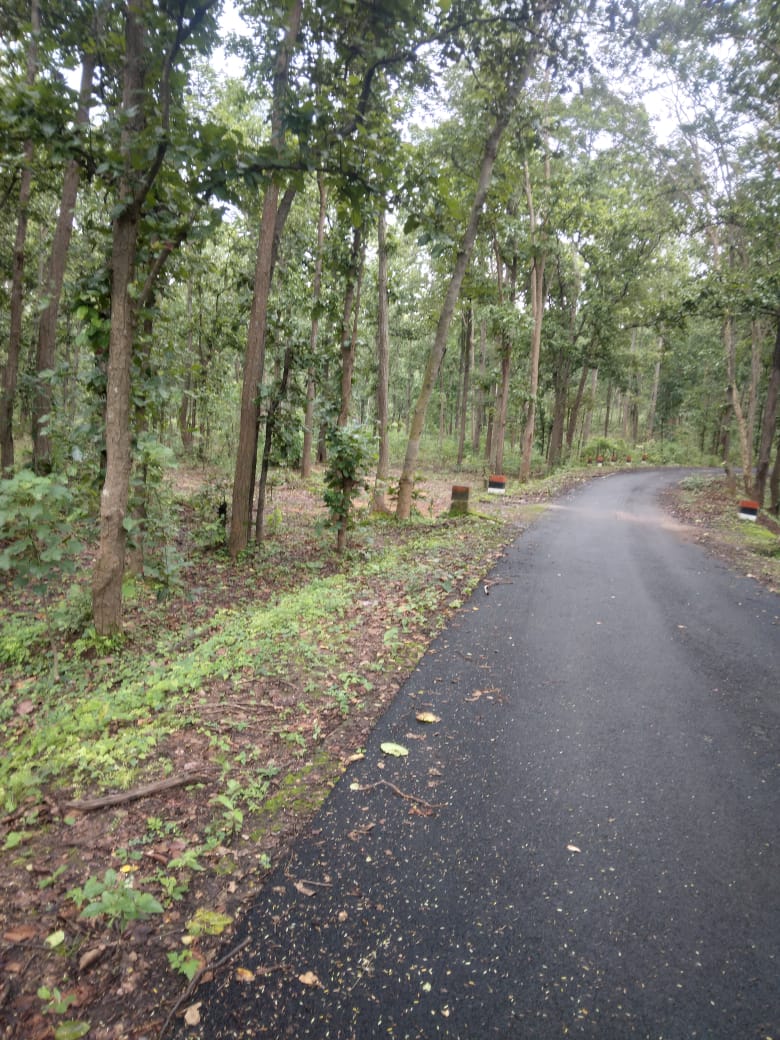
Manendragarh-Chirmiri-Bharatpur district of Chhattisgarh is surrounded by natural beauty on all sides. Driving your vehicle on the winding road passing through its high and low hills, you practice many postures and yogasanas to maintain your balance by sometimes leaning left and sometimes right. When the beauty of the dense sal forests spread around this road appears in different forms in different seasons and spreads its own charm, then words become mute in describing its beauty. Bairaagi village surrounded by beautiful hills in Tarabahara Gram Panchayat of this MCB district is known for its natural beauty and the path of the slopes of high and low hills. On the way to reach here, so many different views of hills and forests are visible, which makes one feel like stopping a little far and capturing them in one's eyes. We got information from our friend Parmeshwar Singh that even the wrestlers of this place enter the ground to try their wrestling moves by clapping. This Bairagi village has a very interesting story. Come, let us go to this Bairagi village for tourism.
We reach Kathautia by travelling 9 km from Katni-Gumla road of National Highway 43, which runs around Manendragarh, coming out of Manendragarh market, the headquarter of MCB district. From here, we reach Kathautia by travelling northwards on Manendragarh- Janakpur road, Chhattisgarh State Highway (Rajya Marg) No. 8, covering a distance of about 15 km. We have to reach Biharpur. After reaching Biharpur, two roads are visible on the right in the north-east direction. The first road is Biharpur-Sonhat road and after proceeding further from here, after 500 m, the second road is called Biharpur-Bairagi road. The yellow spiral shaped mark on the milestone on the side of the road tells that this is the road built under the Pradhan Mantri Gram Sadak Yojana of the village. While walking on this road built under the Pradhan Mantri Gram Sadak Yojana, you definitely remember Prime Minister Atal Bihari Vajpayee, the visionary of the country's progress, otherwise it would have taken the country another fifty years to reach a village like Bairagi. Atal ji, who knew the pulse of village development, his message of providing electricity and roads to the villages has become the key to village development today.
After reaching Biharpur, before turning onto Bairagi road, if you are confused about the way, then take the help of a villager and turn on the right road. After moving a little further from here, about 1.5 km, a small river crosses your path, crossing the road. After crossing the bridge of this river, an ashram made of tin shed and straw is visible from a distance on the left. Yes, this is the road to Shiv Dhara. While going to Bairagi, if you want, you can enjoy the Shiv Dhara waterfall with your family for some time. When the water stream of Ghatol river suddenly falls 50 lakh feet from the hill, it gets dispersed on reaching there. It seems as if the water streams passing through the matted locks of Lord Shiva are actually spreading. This is the reason why it was named Shiv Dhara. The roots of the banyan tree try to stand firmly between the rocks at the height of this Ghatol river and sink and rise with the water. At many places, these roots are seen playing the game of naughty children by stopping the water. On looking carefully and through the camera, the veins of the roots of the banyan tree actually appear as the reflection of the matted locks of Shiva.
To the north of this Shiv Dhara, the Devgarh hills range, rising and falling, can be seen spreading its arms far and wide. At different places, these hills have been associated with the name of that village or place. Similarly, when we reach Bairagi village while descending from the hill, the villagers know it as Bairagi hill. This region of Satpura hills gradually moves forward through the path built on the slope, the beauty of dense Sal forests here captivates your mind. The leaves stop the water falling on the new leaves that have emerged in the rainy season by spreading their hands and then like a girl standing under the eaves of a tiled house, they collect it in their palms and drop it on the ground drop by drop and feel happy. At some places, thick creepers reach the heights by embracing these trees and measuring the curves of the trees and the same spread purple petals between their thin long leaves and laugh like children reaching heights. After the process of falling of some leaves in autumn, the leaves of these trees also play a very important role in raining and preventing it from flying away. Due to its strong wood, it is called Agniballabha and Ashvakarna in Sanskrit. Whereas in the regional language, the villagers of Bihar call the Sal tree Sakhua and in Surguja of Chhattisgarh it is called Sarai. When the rural tribal girls come out under this Sarai with a tukni on their head to uproot Putu and Khukhri, the gifts of the rainy season used in rural vegetables of the mushroom group, then the entire forest gets mesmerized by their beauty and lies on the ground. Yes, when Putu raises his head around the roots of these trees and looks out of the soil to see the beauty of these girls, at the same time these are uprooted by the soft hands of the girls. In Bastar it is called Boda. This Putu species of mushroom vegetable, which grows in the red loose soil under the Sal forests, can only be produced by nature. When the rural girls reach the market with these puttu and khukhri in their baskets, there is a commotion in the market and a crowd of people reaches the vegetable market to buy them. These days, these tribals get its price from ₹ 1000 to ₹ 1500 in the initial market. Due to their high price, brokers have become active now who can be seen buying them at a very low price and selling them at a higher price in the market. This gift of nature is a source of additional income for the rural girls during the rainy season, although it ends within a month or two, to be born again the next year.
When the forests of Sarai bloom in bunches with the arrival of spring, it is very difficult to say whether it is a flower or some artist has decorated the forest by decorating the hair of the forest with white flowers. In the summer season, when its fruits fly with their petals and go far away, we have to stare at them without blinking to see them. In spring and Holi, the forest is laden with Tesu flowers. By the time Holi comes, it seems as if Holi of colours of Phagun is being played in the forest. In these years, the paths twisting like a snake passing through the hills full of forests invite us to take in this natural beauty for some time. Descending from these slopes, a village surrounded by mountains is visible from a distance, yes this is Bairagi village. As we reach down the slope, a small river blocks our way by spreading its hands like a girl. On asking its name, it says I am the Kewai river originating from the Bairagi mountain. Once this river of this village used to block the way of this village during the rainy season. At that time it was very difficult for the villagers to cross from one side to the other, especially if any member fell ill, it was not possible to reach the hospital, but after the construction of a small bridge, this path has become easy now. When we look towards the north towards the height of this river, a small waterfall is visible about a kilometer away. As soon as the Kewai river originating from the Bairagi mountain moves forward a kilometer or two, it suddenly jumps 30-40 feet down to the ground and forms a waterfall. The villagers call it Ghaghiya waterfall. This village is surrounded by small hills from all sides. Who knows what all is there in these hills. It is said that along with wild animals, this forest is the source of wild herbs. It is said that earlier rabbits were found here in abundance and groups of monkeys were seen hanging on trees with small children anywhere. Now time has limited them, there is nothing left for them to eat in the forest. In scientific terms, these hills are a storehouse of biodiversity, but human interference has now made a dent in it as well. The hill spread to the north of the village is called Bamhni hill. It is said that when the forest dweller Lord Shri Ram came to the ashrams of sages and saints in the midst of these forests to seek their blessings, he also reached the ashram of sage Nidadh, the pinnacle of mantra power, Jatashankar. This is an old hilly footpath to reach the underground temple of Lord Shiva, which starts from this Bairagi village and goes further through Hanumangarhi. Some people also call it Hanuman Dwari. Further, after walking for about 10 kilometers through Kalighat, it takes you to Jatashankar passing through Chaplipaani village.
This Bairagi village also has its own story. Talking to the villagers, we came to know that cockfights are the identity of this village. You must have seen wrestlers wrestling on Nag Panchami, but in Bairagi village, on the second day of Holi, on Pareva Tithi, after applying colours, the villagers gather in the Chaupal and form a big circle. In this circle, specially trained roosters are brought down to fight by clapping. The roosters fighting like freestyle wrestling attack each other by flying and make each other bleed. People drenched in applause encourage them. The winning cock is declared by the team of elders. Similarly, the enthusiasm and passion of the competition by women catching the cock is worth watching. When the women, who enter the field wearing Kachni Kaanch (pulling the sari a little up and tucking it in the waist), run here and there after the cock that flies away again and again, the sweat on their foreheads shows their strength and hard work. The roosters too are probably happy to see them running around like this. That is why the rooster that flies away tries to dodge them by using its strength and power. People describe the enthusiasm of the competing women by saying 'very good'. The arrival of people from outside villages to watch this competition that goes on for many hours is making this game entertaining and interesting, while this Bairagi village is gradually developing its own identity.
The beauty of the Sal forests decorated in their different forms all the year round and the natural beauty of Bairagi is inviting you to enjoy seeing the Ghaghia waterfall of the Kewai river after reaching Bairagi village. This village, steeped in tribal traditions with the mantra of living life with nature, is still far away from urban civilization. Now the children here are also going out in search of jobs and livelihood after getting educated, but this trend has not gone very far yet. You will be happy to know that former District Panchayat member Ramesh Ram ji is a resident of this village and he has tried to do a lot for the village which is visible at present but in terms of development, for the basic facilities in this village, this saying will be enough that Delhi is still far away. But it is certain that Bairagi village will still charm you with its innocent smile. Do keep in mind that there is no hotel in the village to arrange for your tea and water. Yes, seasonal fruits like banana, papaya and corn, cucumber found in rural areas can be available to you. Which you can buy from the village garden or get as a gift from a rich farmer. Therefore, bring your own refreshments with you to this village and to get acquainted with the proximity of Sal forests settled in the lap of nature and the tribal life settled in the middle of the forests, Bairagi village, the origin of the Kewai river, is waiting for you.