
 India
India
 World
World
 Entertainment
 Sports
 Chhattisgarh
 Haryana
 Delhi
Delhi
 Religious
 Business
 Tech & Auto
 Education
 Health
 Andhra Pradesh
 Telangana
 Sikkim
 Odisha
 Jharkhand
 Assam
Assam
 Nagaland
The NEET-UG exam is being held again today across the country amidst tight security arrangements
over 2.2 million (22 lakh) candidates are expected to participate
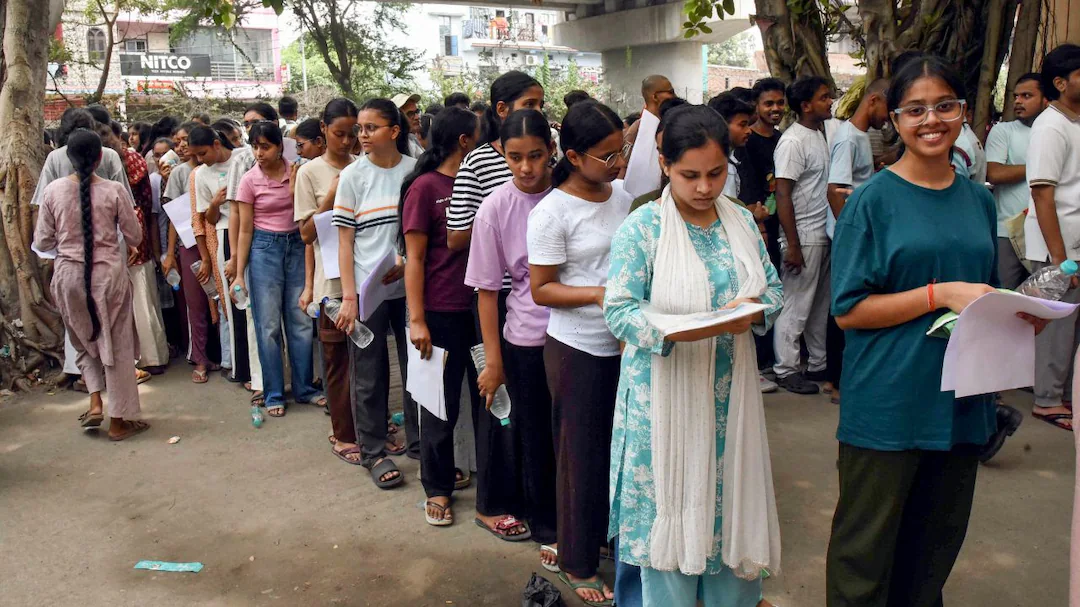
New Delhi, NEET-UG, the country's largest medical entrance exam, has been mired in controversy for the past few years. Allegations of paper leaks and irregularities in the examination process sparked a nationwide uproar in 2024. Following accusations of paper leaks and breaches of exam confidentiality, the National Testing Agency (NTA) had to decide to cancel the entire examination and conduct it again. The central government handed over the investigation to central agencies and announced comprehensive security reforms. Investigative agencies found indications that the question paper had reached certain individuals prior to the exam; it was alleged that organized gangs had established a network to provide question papers and answers to candidates in exchange for large sums of money. These incidents raised serious questions regarding the fairness of the exam; consequently, considering the future of lakhs of students, the decision was made to cancel and re-conduct the test. Investigative agencies are probing the roles of suspects linked to paper leak networks, coaching centers, and touts, leading to arrests across several states. However, the final identification of the guilty and any action against them will be determined only after the completion of the investigation and judicial processes. The central government has mobilized central agencies and the CBI to investigate the matter. The cancellation of the exam has had the greatest impact on students, as lakhs of candidates have had to prepare all over again. The rescheduling of the exam led to increased mental stress, uncertainty, and financial burdens. Students traveling from remote areas and their families faced expenses related to travel, accommodation, and other needs. Many students also expressed a lack of faith in the examination system on social media and various other platforms. The NEET controversy sparked a national debate regarding the credibility of the education system; protests erupted across various states, student organizations demanded an impartial inquiry, and numerous petitions reached the Supreme Court. Terming the recurring incidents serious, the Supreme Court directed the Centre and the NTA to take concrete measures to prevent any recurrence of such events in the future. Meanwhile, the NTA decided to conduct a re-examination; approximately 2.2 to 2.3 million candidates are expected to participate, although some petitions concerning the exam remain pending in court. Thousands of examination centers have been set up nationwide for the re-examination, with coordination established among state governments, district administrations, police, central security agencies, and the NTA. In several states, examination centers are being kept under special surveillance by categorizing them as 'sensitive' or 'highly sensitive.' To ensure the security of the re-examination, the NTA has implemented several new measures, including comprehensive CCTV surveillance, AI-based camera monitoring, biometric and facial verification, secure packaging and tracking of question papers, pre-exam mock drills, special arrangements for power supply and technical backups, deployment of signal jammers, and storing question papers in secure vaults under round-the-clock guard. Additionally, the Central Government has instructed states to maintain law and order; police, paramilitary forces, and administrative officials have been specially deployed in many locations. A multi-layered surveillance system has been established to safeguard examination materials, and special security protocols have been adopted for transporting question papers in certain areas. The NEET controversy has underscored the critical need to ensure transparency and security in the country's major entrance examinations. The Central Government, the NTA, and the judiciary are all emphasizing the need for structural reforms in the examination system to prevent incidents like paper leaks in the future. Since the future of millions of students hinges on these examinations, maintaining their fairness and credibility has become a national priority.