
 India
India
 World
World
 Entertainment
 Sports
 Chhattisgarh
 Haryana
 Delhi
Delhi
 Religious
 Business
 Tech & Auto
 Education
 Health
 Andhra Pradesh
 Telangana
 Sikkim
 Odisha
 Jharkhand
 Assam
Assam
 Nagaland
The NEET controversy has heated up from Delhi to the entire country
All eyes are on police action, government-protester talks, and the court's stance
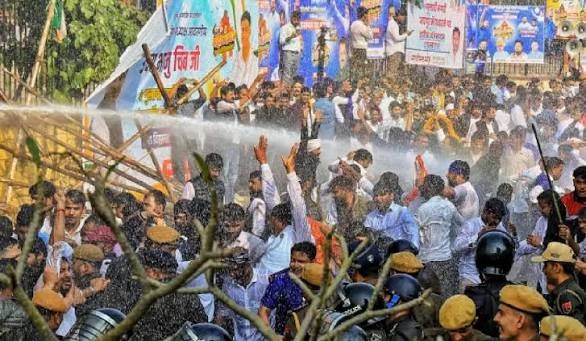
Delhi, The ongoing agitation in Delhi, led by the Cockroach Janata Party (CJP), demanding reforms in the education system and against alleged NEET exam irregularities, escalated into a violent protest after clashes broke out between police and protesters during a march to Parliament. Police used lathicharge and tear gas to disperse the crowd. This action sparked a nationwide political and social debate. Following the incident, the Delhi Police filed several FIRs alleging violence, damage to public property, and disruption of law and order. Police say the protesters attempted to march towards Parliament despite lacking permission. Meanwhile, protesters allege that force was used against the peaceful protest. Several opposition parties, including the Congress, criticized the police action, calling it an attack on democratic rights. The opposition demanded answers from the central government and reiterated its demand for the resignation of the Education Minister. Several opposition leaders also reached Jantar Mantar and stood in support of the protesters. The central government stated that maintaining law and order is the responsibility of the Delhi Police. The government also initiated talks with protest representatives. Union Minister J.P. An attempt was made to hold a meeting of the representatives of the movement with Nadda, however, consensus could not be reached on all the demands. The government also reiterated its commitment to improve the education system and make the examination system more transparent. The government says that steps are being taken to improve the examination system, stop paper leaks and take action against those responsible. Security agencies have also been instructed to maintain law and order. Why did the foreign media jump into this entire incident? International media outlets like Reuters, The Guardian, and Al Jazeera described this movement as one of the largest youth movements in India. Many reports mentioned police action, the education system, unemployment, and youth anger. However, foreign media publish reports on events in various countries around the world under the guise of independent journalism. They do not have the right to make legal judgments on any country's internal affairs, but are publishing news based on available facts, eyewitness accounts, government statements, and independent reporting. Their reports cannot influence India's judicial or government processes. An urgent hearing was sought in the Supreme Court on the petition filed against the lathicharge, however, a bench headed by the Chief Justice refused to grant an urgent listing. The court also refused to view the video during the initial mention and stated that immediate intervention at this stage is not appropriate. This does not mean that the case has been finally decided, but only that the request for an urgent hearing was not accepted. Social activist Sonam Wangchuk is currently in Delhi's Safdarjung Hospital. He was taken to the hospital for health reasons during the hunger strike. According to available reports, his condition is stated to be stable. They have said that they will consider ending their fast only when their main demands are met or a meaningful solution is found. The agitation is continuing at Jantar Mantar and other places. The protesters are adamant on their demand for education reforms, transparency in the examination system and accountability. The government is talking about finding a solution through talks while the police is insisting on maintaining law and order. In the coming days, further court hearings, talks between the government and the protesters and political developments will determine the direction of this issue.