
 India
India
 World
World
 Entertainment
 Sports
 Chhattisgarh
 Haryana
 Delhi
Delhi
 Religious
 Business
 Tech & Auto
 Education
 Health
 Andhra Pradesh
 Telangana
 Sikkim
 Odisha
 Jharkhand
 Assam
Assam
 Nagaland
The 37-day student movement ends
CJP wins a major victory, the Education Minister resigns, and the government accepts key demands
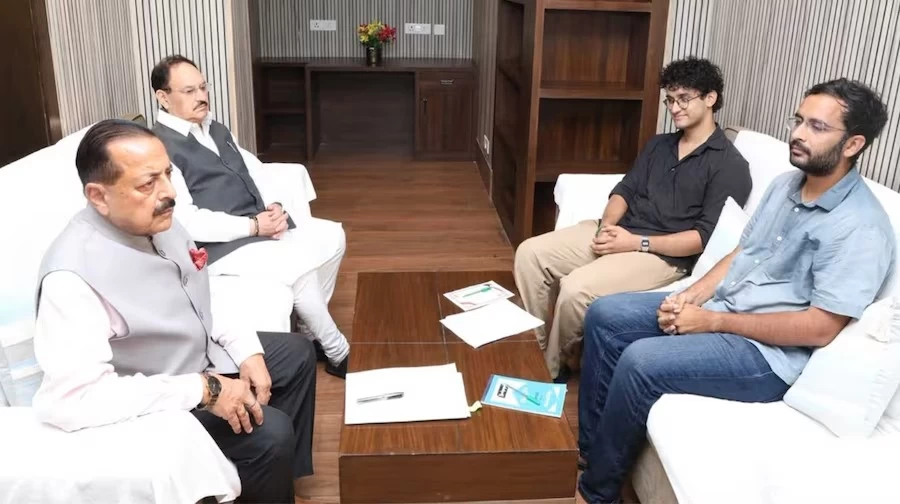
New Delhi, Following allegations of NEET-UG 2026 paper leaks and irregularities in other competitive examinations, anger grew among students across the country. In this atmosphere, a satirical campaign called the Cockroach Janta Party (CJP) began on social media. It gradually evolved into a student movement. Later, its epicenter was Jantar Mantar in New Delhi, where the movement gained national recognition. Initially, the main issue of the movement was a fair investigation into the NEET paper leak and reforms in the examination system. However, over time, it also expanded to include demands for transparency in the education system, strict laws to prevent paper leaks, and the resignation of Union Education Minister Dharmendra Pradhan. Students from across the country, aspirants for competitive examinations, several teachers, social activists, and later, leaders of various opposition parties also came out in support. Although the CJP has repeatedly stated that its movement is a student movement and is not an official platform of any political party, the movement gained momentum when clashes broke out between police and protesters during the Parliament March in Delhi. Following allegations of lathicharge, detention, and use of force, the issue became a topic of discussion across the country. Subsequently, student protests took place in several cities, including Mumbai, Bengaluru, Patna, and Lucknow. Opposition parties also targeted the government and raised the issue inside and outside Parliament. Initially, the movement was called a conspiracy by the opposition, but different sides had different claims on this issue. Pro-government leaders alleged that the opposition was trying to gain political advantage from the movement. Meanwhile, the CJP and student leaders associated with the movement consistently maintained that their objective was only to improve the education system and provide justice to students. So far, no official conclusion has emerged declaring the entire movement as part of a political conspiracy. For nearly a month, the movement remained a topic of national debate. Hashtags like #NEET, #PaperLeak, and #CJP trended on social media. Protests took place at several locations. The monsoon session of Parliament was also affected by this issue, and pressure continued to mount on the government. It was also seen as the biggest student challenge of Prime Minister Narendra Modi's third term. Delhi Police imposed restrictions such as Section 163 at several locations, detained protesters, and increased security in the Parliament area. Traffic and metro services around Jantar Mantar and Parliament Street were also affected for some time. The central government held several rounds of talks with CJP representatives. During the protest, the CJP made the following key demands: 1. The resignation of Union Education Minister Dharmendra Pradhan 2. Comprehensive reforms to the examination system and concrete measures to prevent paper leaks 3. Withdrawal of cases filed against protesters and no future action 4. Compensation and accountability for families affected by the NEET controversy. After several rounds of talks between the government and the CJP, a significant consensus was reached. The government assured to work on improving the education system, consider examination reforms, not take action against protesters, and withdraw the filed cases. Furthermore, Union Education Minister Dharmendra Pradhan resigned, which was one of the most prominent demands of the protest. After the protest lasted for approximately 37 days, the CJP announced that the government had accepted its key demands. Following this, the protest at Jantar Mantar was ended and protesters were appealed to return to their homes peacefully. However, CJP leaders stated that while the protest may have ended, the fight for education reform and accountability will continue.