
 India
India
 World
World
 Entertainment
 Sports
 Chhattisgarh
 Haryana
 Delhi
Delhi
 Religious
 Business
 Tech & Auto
 Education
 Health
 Andhra Pradesh
 Telangana
 Sikkim
 Odisha
 Jharkhand
 Assam
Assam
 Nagaland
Supreme Court's Landmark Verdict
Married Daughters Also Entitled to Compassionate Appointment
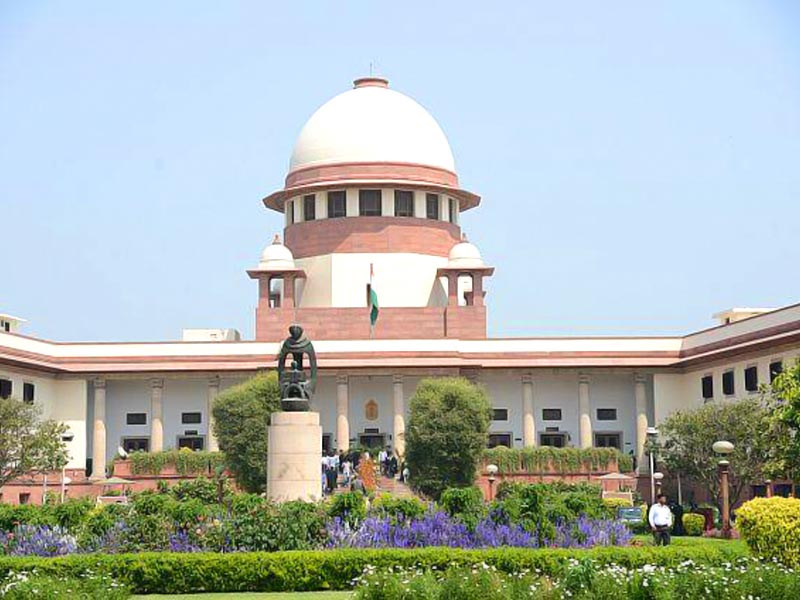
New Delhi, Delivering a significant verdict, the Supreme Court has clarified that following the demise of a government employee, their married daughter cannot be denied a compassionate appointment solely on the grounds of being married. The Court observed that if a son continues to be regarded as a member of the family even after marriage, then treating a daughter as distinct from the family merely because of her marriage runs contrary to the constitutional Right to Equality. This judgment, pronounced on June 2, 2026, stated that provisions within government service rules that exclude married daughters can be deemed discriminatory and arbitrary. The Court further underscored that social dynamics have evolved, and even today, numerous married daughters remain financially dependent on their parents or shoulder the responsibilities of their family. Does this mean every married daughter will now secure a job? This verdict does not imply that every married daughter will automatically be granted a compassionate appointment; the Supreme Court has merely expanded the scope of eligibility. All other conditions for appointment will continue to apply as before. The concerned department retains the authority to verify whether the applicant was, in fact, dependent on the deceased employee and whether the family is facing a situation of financial distress. Given this ruling, legal experts believe that the potential for disputes will persist in many cases even after this judgment. The most critical issue will revolve around financial dependency; if a married daughter is residing separately with her husband and is financially self-sufficient, the department may scrutinize her claim on a case-by-case basis. Furthermore, the service rules of several states and government departments may still be anchored in outdated provisions. Consequently, states may be required to amend their respective rules. Until such amendments are enacted, many cases may necessitate recourse to the courts. In this verdict, the term "parent"—or *mata-pita*—generally refers to the employee who passed away during the course of their service. That is to say, if the deceased employee was the father, a daughter may stake a claim based on his employment; similarly, if the employee was the mother, the daughter may still be eligible for a compassionate appointment based on her mother's service. Here, "parents" primarily denotes biological or legally recognized parents who died while in service, and for whose dependent families this provision has been established with the specific objective of providing relief.
Now, legal experts are raising a further question: can a job also be secured based on the employment of one's in-laws (mother-in-law or father-in-law)?
This is precisely the question that may become the subject of future legal debate. Under normal circumstances, the benefit of a compassionate appointment is extended to the dependent family of the deceased employee. If the mother-in-law or father-in-law was a government employee, the benefits would accrue only to those relatives explicitly recognized as dependents under their specific service rules. In most instances, a daughter-in-law is not directly categorized as an eligible dependent; however, if the service rules of a particular state or department explicitly recognize a daughter-in-law as a dependent family member—and if she was, in fact, financially dependent on the deceased employee—then, under special circumstances, her claim may be considered. Nevertheless, the current verdict pertains directly and primarily to cases involving daughters and their parents, rather than to cases involving in-laws.
From a socio-legal perspective, experts opine that this verdict is not merely a matter of employment; it is inextricably linked to the issue of equal rights for women. For a long time, in many states, married daughters were not considered part of the family unit solely on the grounds of their marital status. This Supreme Court judgment challenges that mindset and delivers a clear message: marriage does not sever a daughter's ties with her parents. Furthermore, legal scholars believe that in the times to come, this verdict could be cited as a precedent in other matters concerning service rules, familial rights, and dependency claims. However, the final determination in each individual case will ultimately rest upon the specific service rules, familial circumstances, and facts pertaining to financial dependency. This verdict is being hailed as a significant stride toward upholding women's rights and ensuring equal opportunities—a development poised to impact the lives of millions of government employee families across the nation.