 India
India
 World
World
 Entertainment
 Sports
 Chhattisgarh
 Haryana
 Delhi
Delhi
 Religious
 Business
 Tech & Auto
 Education
 Health
 Andhra Pradesh
 Telangana
 Sikkim
 Odisha
 Jharkhand
 Assam
Assam
 Nagaland
Orbit size reduction due to successful de-boosting operation by LM
Awaiting de-boosting operation scheduled on 20 Aug 2023
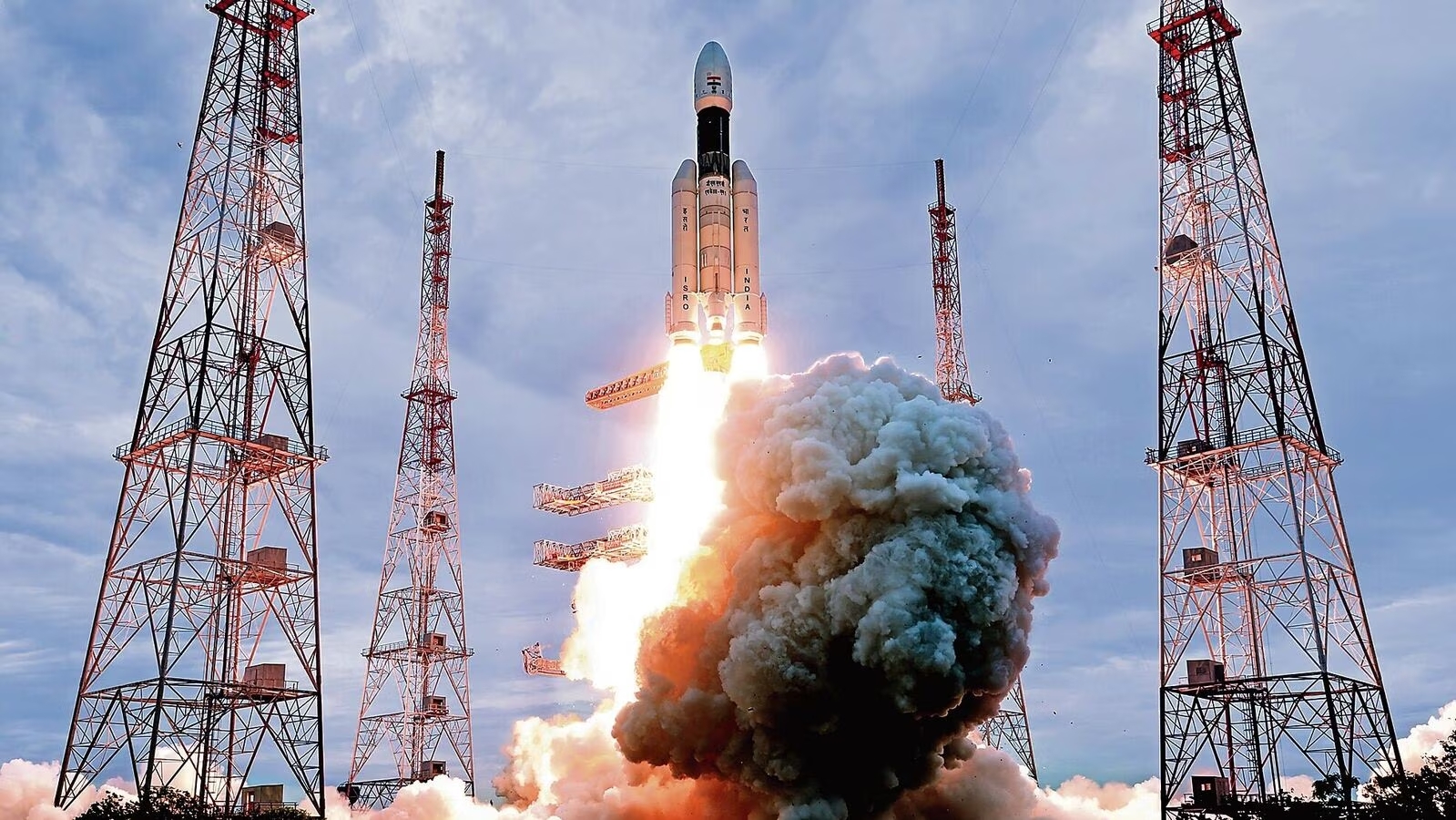
Sriharikota, The 'deboosting' process of the lander module of Chandrayaan-3 has been successfully completed. ISRO's mission has reached closer to the moon. ISRO told in the latest update that the health of the Lander Module (LM) is normal. LM successfully carried out a de-boosting operation. This reduced its orbit to 113 km x 157 km. The second de-boosting operation is scheduled for 20 Aug 2023 at about 2.00 PM.
This major step is part of the final preparations of the spacecraft for the scheduled landing on the lunar surface on 23 August. Deboosting involves slowing down a spacecraft by reducing its speed. Which is a necessary process towards achieving a stable orbit. After this operation, Vikram Lander will enter a slightly lower orbit around the Moon. This process will prepare the lander for the final landing on the lunar surface. Vikram Lander is named after Vikram Sarabhai, the father of the Indian space programme.
The deboosting operation is part of a series of successful operations that have been going on since the launch of Chandrayaan-3 on July 14. Chandrayaan-3 first completed five orbits of the Earth, followed by a trans-lunar injection on 1 August. Which sent it on a path towards the moon. Chandrayaan-3 successfully entered the Moon's orbit on 5 August. Vikram Lander and Pragyan Rover successfully separated from the propulsion module on Thursday. The propulsion module will continue its journey in the current orbit for months or even years, while the lander prepares for the final landing on the Moon.
With the completion of the deboosting of Vikram Lander, a series of operations have started to place it in the close orbit of the Moon. In this orbit, the closest point to the Moon is Perilune 30 km and the farthest point from the Moon is Apollone 100 km. This operation sets the stage for the most important part of the landing, which will cover 30 km. It involves reducing the velocity of the lander from the height of the landing till the final landing. The success of this mission will further strengthen India's position in the field of space research in the world.