
 India
India
 World
World
 Entertainment
 Sports
 Chhattisgarh
 Haryana
 Delhi
Delhi
 Religious
 Business
 Tech & Auto
 Education
 Health
 Andhra Pradesh
 Telangana
 Sikkim
 Odisha
 Jharkhand
 Assam
Assam
 Nagaland
Nitin Gadkari's clarification on the E20 controversy
I have nothing to do with the ethanol blending policy; the Petroleum Ministry manages it
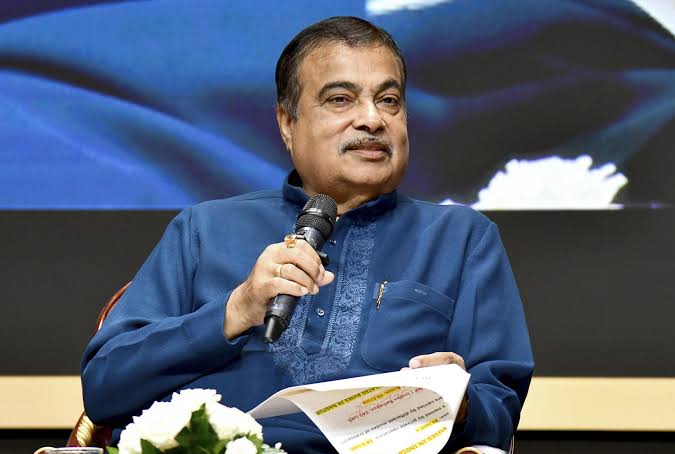
Union Road Transport and Highways Minister Nitin Gadkari has clarified amid the ongoing controversy surrounding the Ethanol Blending Policy (E20) that he has no direct role in the formulation, implementation, or pricing of the policy. He stated that the ethanol blending program is entirely under the Ministry of Petroleum, while his ministry's work is limited to road transport and vehicle-related policies. Gadkari's statement is rapidly going viral on social media.
Gadkari approaches the High Court against deepfake videos and misleading propaganda
Amid allegations of conflict of interest being leveled against him and his family regarding the E20 policy, Nitin Gadkari has filed an 86-page petition in the Bombay High Court. The petition seeks a ban on AI-generated deepfake videos and alleged misleading and defamatory content circulating on social media. These posts and videos claimed that Gadkari and his family were benefiting financially from the E20 policy. The court has accepted the petition, and a hearing on the interim relief, including the removal of the controversial material, is expected soon.
Government's Position on the E20 Policy
E20 is a fuel blended with petrol containing 20 percent ethanol. The government implemented it with the aim of reducing dependence on crude oil imports, increasing farmers' income, and reducing carbon emissions. This program was launched in a phased manner in April 2023 and will be implemented nationwide by 2026. The government claims that this initiative has saved foreign exchange, provided additional markets for farmers, and helped protect the environment.
What did Gadkari say about the engine and mileage?
Some vehicle owners have complained about E20 fuel, such as reduced mileage and engine damage. Gadkari stated that no proven case of E20 causing engine damage has been reported so far. He added that while ethanol's energy efficiency is slightly lower than petrol, there may be a slight difference in mileage, but the impact is minimal in urban areas. He also urged anyone with a proven example of E20 causing engine damage to come forward.
Responding to allegations against his family business
Regarding questions about his family's business, Gadkari stated that his family operates a sugar mill, but ethanol production is a very small part of that business, less than half a percent of the total. He reiterated that ethanol prices are determined by the Cabinet, and he has no role in this process. According to him, the policy of promoting ethanol is not new, but was initiated during the tenure of former Prime Minister Atal Bihari Vajpayee and later extended by the UPA government.
The policy is linked to energy security and the interests of farmers.
The government states that the E20 program aims to strengthen the country's energy security and reduce expenditure on petroleum imports. Ethanol is produced from agricultural products such as sugarcane, maize, and paddy straw, providing additional income opportunities for farmers. Citing the example of countries like Brazil and Thailand, Gadkari said that ethanol-blended fuel has been used there for a long time and has not caused any significant damage to vehicles. He explained that new vehicles manufactured in India are being made E20-compliant, although older models may face technical limitations.
Debate on the policy continues, with differing views from the government and consumers.
Experts believe that the ethanol blending policy is an important step towards energy security and environmental protection, but it also faces issues such as compatibility with older vehicles, mileage, and consumer choice. The government is touting E20 as safe and beneficial, while some vehicle owners and consumer organizations are demanding the availability of pure petrol or E10 alternatives. As such, this issue remains a topic of discussion at all three levels: technical, economic, and political.
Preparing Legal Action Against Social Media Companies
Nitin Gadkari has also obtained permission from the Bombay High Court to file a civil lawsuit against Meta Platforms, Google LLC, X Corp (formerly Twitter), and other digital platforms. The High Court granted him permission to file the lawsuit on July 28, 2026. Gadkari has requested the court to permanently ban, remove, and prevent the dissemination of fake, misleading, and defamatory videos and posts, and direct them to prevent the spread of such content in the future.