
 India
India
 World
World
 Entertainment
 Sports
 Chhattisgarh
 Haryana
 Delhi
Delhi
 Religious
 Business
 Tech & Auto
 Education
 Health
 Andhra Pradesh
 Telangana
 Sikkim
 Odisha
 Jharkhand
 Assam
Assam
 Nagaland
Judicial custody extended for all eight accused in Ram Mandir donation embezzlement case
Next hearing on July 13
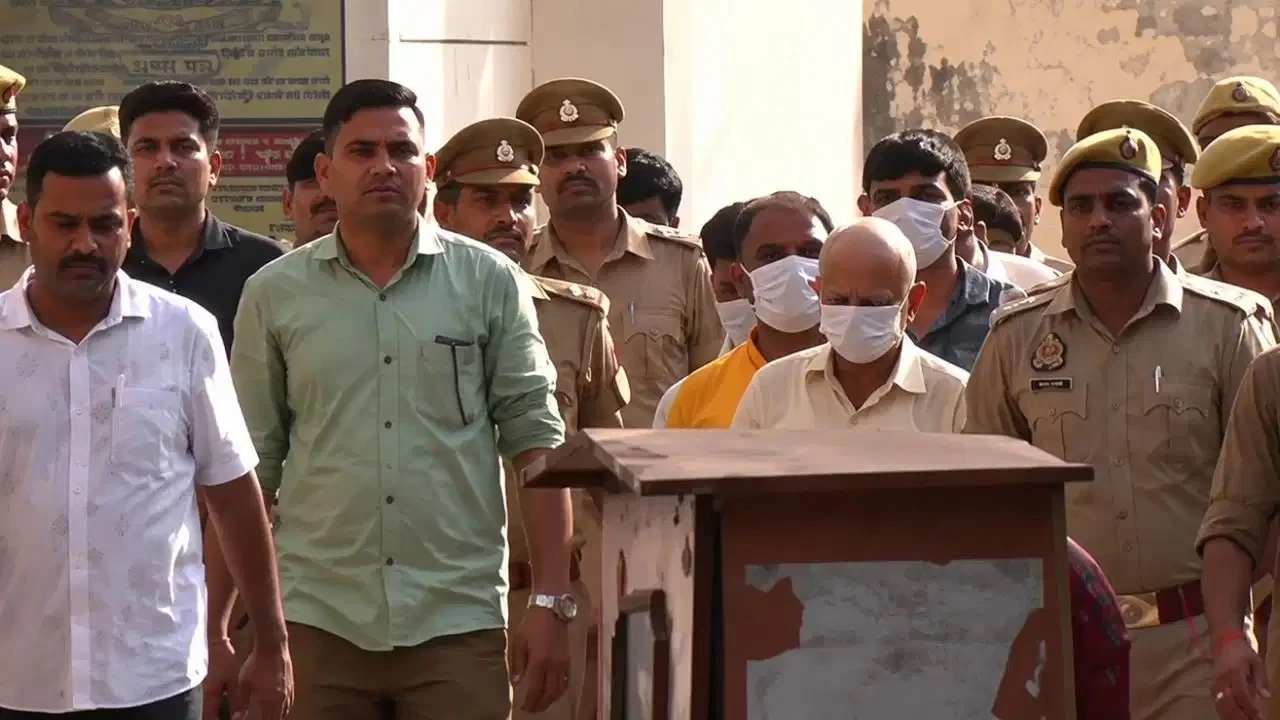
The investigation into the alleged misappropriation of donations linked to the Ayodhya Ram Mandir continues to progress. All eight accused arrested in the case were produced before the Anti-Corruption Court via video conferencing, where the court ordered them to be remanded to judicial custody for 14 days; consequently, it is clear that the accused will remain in jail for the time being. The next hearing is scheduled for July 13. Notably, the police did not seek custody remand for any of the accused. Investigative agencies state that the probe is proceeding based on interrogations conducted so far and recovered documents, while the examination of digital evidence and financial transactions is also underway. During the investigation, the police and the anti-corruption team conducted raids at various locations linked to the accused. According to sources, searches were carried out at the residences and offices of the accused in districts other than Ayodhya as well. Reports indicate the seizure of several important documents, bank account records, electronic devices, and materials related to financial transactions; however, the police have not officially released a detailed account of all the recoveries or the specific items found at each accused's home. Investigative agencies maintain that the true extent of the network and the flow of funds will only become clear after analyzing the seized documents and digital data. Investigating officers state that the documents and digital records obtained during the raids have yielded several new leads. Information regarding banking transactions, the utilization of donation funds, and account operations is being thoroughly scrutinized. If these leads are corroborated, the roles of other individuals could also come under the ambit of the investigation. The police claim that the probe is proceeding entirely based on evidence and financial records to ensure a fair and transparent investigation into the entire episode. Given that the Ram Mandir is a highly sensitive issue linked to the nation's faith, the matter has stirred up a political storm. Opposition parties have begun questioning the government and the concerned institutions, while the ruling party asserts that the law is taking its course and the guilty will not be spared under any circumstances. Political analysts believe that this matter... This matter could impact Uttar Pradesh politics in the near future, given that assembly elections are scheduled for 2027; the opposition may attempt to leverage this issue by linking it to government accountability. Samajwadi Party chief Akhilesh Yadav has targeted the government over this affair, alleging that transparency and accountability must be ensured in matters concerning faith and that strict action should be taken against the guilty. Political analysts believe that if the investigation yields significant revelations, the opposition—particularly the Samajwadi Party—might try to use this issue as a key political weapon in the 2027 assembly elections. However, it is premature to predict the extent to which this issue will influence electoral equations, as its impact will depend on the investigation's final findings and the public's reaction.
Leaders of the Bharatiya Janata Party (BJP) maintain that the government has not interfered in the matter and that investigative agencies are functioning independently. The BJP argues that taking action against the guilty is proof of good governance and transparency, and therefore, the opposition should refrain from politicizing the issue. The ruling party further asserts that the Ram Mandir is a center of faith for millions and that stern action will be taken against anyone responsible for irregularities, regardless of their organizational or personal affiliations. All eyes are now fixed on the next hearing scheduled for July 13, while investigative agencies continue to examine the seized documents, digital records, and financial transactions. Should new facts emerge, further arrests or revelations are possible. For now, all eight accused will remain in judicial custody, and any indication regarding the future course of the case will only emerge after the court's next hearing.