 India
 World
 Entertainment
 Sports
 Chhattisgarh
 Haryana
 Delhi
 Religious
 Business
 Tech & Auto
 Education
 Health
 Andhra Pradesh
 Telangana
 Sikkim
 Odisha
 Jharkhand
 Assam
 Nagaland
In the Lok Sabha elections, the equations of major parties got complicated due to the decline in voting in the number one seat Saharanpur compared to the last election
Speculation begins in political circles regarding the pros and cons of low voting
CURATED BY – GAURAV SINGHAL | CITYCHIEFNEWS
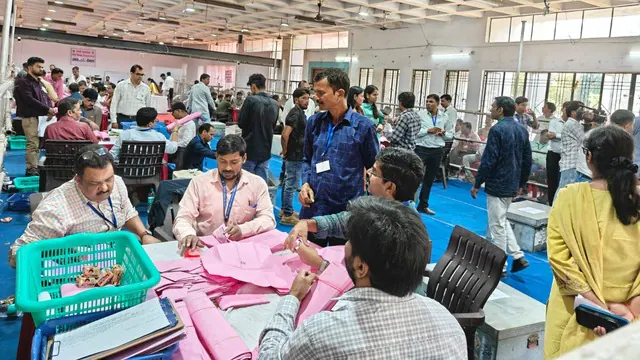
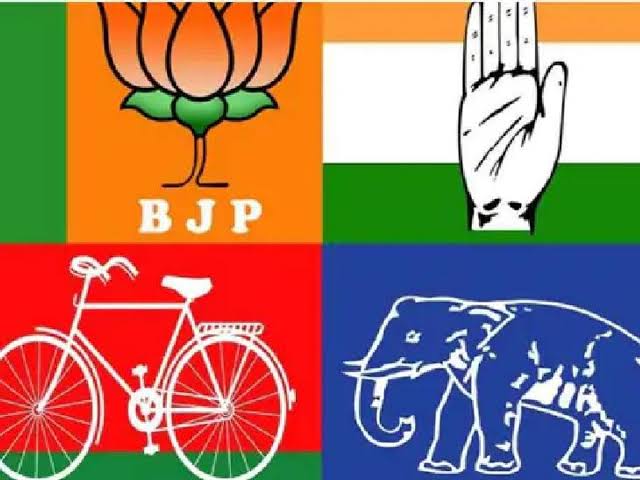
Saharanpur, Saharanpur, the number one seat in the Lok Sabha elections, has complicated the equations of major parties due to the decline in voting in comparison to the last election. This has also started a period of speculation. Although 10 candidates were in the fray on Saharanpur seat and it was believed that the contest here would be triangular between Congress, BJP and BSP, but from the voting trends it became clear that the contest would be between India Alliance's Congress candidate Imran Masood and BJP candidate Raghav Lakhanpal Sharma. Was limited to between. There are 18 lakh 41 thousand 497 voters in Saharanpur seat and now there are 65.95 voters.
Percentage voting took place. There are five assembly seats under Saharanpur Lok Sabha seat. Voting on all five seats was less than the last election. In 2019, it was 73 percent, now 72.34 percent, in Saharanpur Nagar it was 60.61 percent, in Saharanpur Dehat it was 72.99 percent, now in Rampur Maniharan it was 71 percent, now in Deoband it was 68.01 percent. 70 percent voting now 64.16 percent . Voting everywhere
Political experts are looking at this decline in different ways. The Rajput side claims that the decline in voting was due to the resentment of the Rajputs. The trading class Vaishya and the Punjabi community also voted in general in urban areas. That is also being said to be the reason for falling vote percentage. The day temperature on polling day yesterday was 39.3 degrees. Some people are also blaming the extreme heat for low voting. Saharanpur city is the stronghold of BJP and BJP's election strategists had set the target of 70-75 percent voting here. But their hopes were dashed and the lowest turnout in the district was at 60.61 percent in Saharanpur Nagar seat.
Deoband is the area of Minister of State for Public Works Brijesh Rawat. Dozens of villages in this area belong to the minister's Rajput community. The BJP leadership was counting on its minister that he would face the resentment of the Rajputs and ensure heavy voting. After all, he won the Deoband Municipality elections by making BJP's Vipin Garg win despite having one-third Hindu votes, but here also this time the turnout was 2.5 percent less as compared to the last time. 64.16 percent votes were cast on this seat.
Saharanpur Dehat is a Muslim dominated area. Where it is led by SP MLA Ashu Malik. There was 68.13 percent voting. There too there was a decline of 4.86 percent in voting. But still the voters there worked to raise the hopes of Imran Masood. Same situation prevailed in reserved Rampur Maniharan seat. A decline of three percent was recorded here. This area is an area with mixed influence of both BJP and alliance. This time too, there was heavy voting in Behat, the seat where the alliance has more influence. 72.34 percent votes were cast there. Only 2.66 percent less votes were cast on this seat. This area is represented by SP's Omar Ali Khan. The plan of BJP's election strategists was to compensate for the loss in Behat, Saharanpur Dehat in Saharanpur Nagar seat. But on this seat, 7 percent less votes were cast in the district than last time.
Political commentators are assessing the impact of these fluctuations in voting in their own way. For the first time, the police administration conducted elections in such a fair and peaceful manner that even the opposition parties are not raising fingers. It is a different matter that there is some uneasiness in the BJP camp. BJP candidate Raghav Lakhanpal Sharma has claimed victory and said that the equation is in his favor. Congress candidate Imran Masood said that BJP is losing. He will win by a big margin. Congress made a big dent in the Dalit and Muslim vote bank of BSP candidate Majid Ali and veteran Dalit leader Ravindra Molhu, who joined BJP a day before voting, remained active till the last moment to bring Dalit voters in favor of BJP. Imran Masood Big Dalit leader Vinod Tejayan Advocate was also engaged with the force. Rajendra Karnawal, District Panchayat member of BSP's Deoband area, along with thousands of friends, left BSP and joined Imran Masood. In this way, the BSP which had won by 22 thousand votes in the last elections seemed to be lagging behind this time. BSP had canceled the ticket of its MP Fazalur Rehman Qureshi. MP Qureshi was seeking ticket from SP and since he was out of the election fray, he remained at home. On the day of voting, Imran Masood remained the first choice of Muslim voters. This is Imran Masood's third consecutive election. He has been disappointed both the last times. Whether he is able to enter Parliament this time or not, his fate will be decided on June 4. This is also the third consecutive election of Raghav Lakhanpal Sharma. In 2014, he became MP by defeating Imran Masood. Anyway, in the 12 Lok Sabha elections held since 1977, BJP has been able to win the elections only three times. In 1996 and 1998, Chaudhary Nakli Singh Gurjar and in 2014 Raghav Lakhanpal Sharma were elected MPs from BJP. Seven times out of 12, Muslim MPs were elected from here, out of which Rashid Masood, uncle of Imran Masood, was elected five times. Once Mansoor Ali Khan was elected MP from BSP in 1999.