
 India
India
 World
World
 Entertainment
 Sports
 Chhattisgarh
 Haryana
 Delhi
Delhi
 Religious
 Business
 Tech & Auto
 Education
 Health
 Andhra Pradesh
 Telangana
 Sikkim
 Odisha
 Jharkhand
 Assam
Assam
 Nagaland
Despite lacking the requisite numbers, the BJP has fielded a third candidate for the Rajya Sabha election in Madhya Pradesh
The Congress has vowed not to allow the subversion of democracy
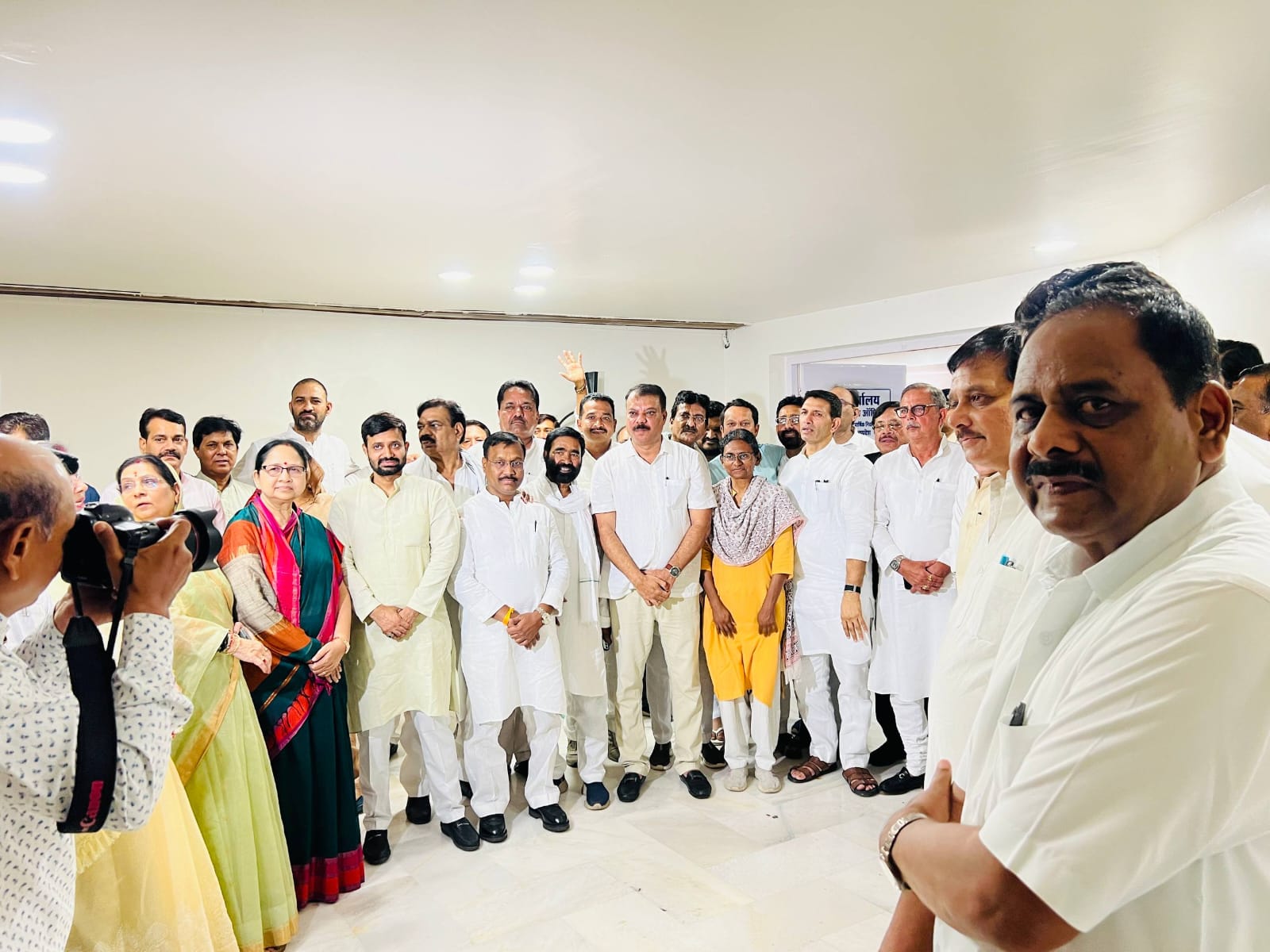
Political activity surrounding the Rajya Sabha elections has intensified in Madhya Pradesh. A fresh debate has erupted in state politics following the BJP's filing of a nomination for a third Rajya Sabha candidate. Terming this move a challenge to democracy, the Congress claims its MLAs remain united and asserts that it will deliver a fitting reply to the BJP by ensuring the victory of its candidate, Meenakshi Natarajan.
Congress leaders argue that the BJP lacks the numerical strength to win a third seat; fielding a third candidate suggests the party is hoping to poach opposition MLAs or induce cross-voting. Conversely, the BJP claims its decision is based on a careful assessment of political strategy and arithmetic. Let us examine the arithmetic of the Legislative Assembly: the House has a total of 230 members, and elections are to be held for three Rajya Sabha seats. Based on electoral calculations, a candidate requires approximately 58 votes to win. Currently, the BJP holds 164 seats, while the Congress and its allies hold around 66. By this calculation, the BJP can easily secure victories for two candidates but would need roughly 8 to 10 additional votes to get a third candidate elected. Consequently, political analysts view the BJP's third candidate as a strategic maneuver. Why is the BJP fielding a third candidate when victory seems unlikely? Political observers suggest several possible reasons: the BJP wants to test whether the Congress can keep its MLAs united. If some Congress MLAs remain absent or engage in cross-voting, the election outcome could shift; the possibility of cross-voting cannot be ruled out.
There have been instances in past Rajya Sabha elections where MLAs have voted against their party line. The BJP may be hoping to secure some additional votes from the opposition camp; fielding a third candidate could also be a strategic move to exert political pressure on the Congress. This forces the Congress to make extra efforts to keep its MLAs united, while the BJP likely anticipates that some independent MLAs or smaller parties might vote in its favor, thereby strengthening its candidate's position. Congress leaders have criticized the BJP's move, terming it contrary to democratic traditions. The party claims that all its MLAs remain united and there is no likelihood of any defection or split. Congress leaders assert that the BJP is aware it lacks the numbers to win a third seat and is attempting to alter the electoral arithmetic through political maneuvering. The party has expressed confidence that Meenakshi Natarajan will garner the necessary support to reach the Rajya Sabha. From a political standpoint, this scenario is not entirely impossible, though it would require the BJP to secure additional votes. If all Congress MLAs remain united and no cross-voting occurs, the Congress candidate is considered highly likely to win.
However, if some MLAs are absent during the vote, votes are declared invalid, or cross-voting takes place, the path could become easier for the BJP's third candidate. It is this possibility that has led the BJP to field a third candidate, thereby making the contest intriguing. The Rajya Sabha election results will not only determine the allocation of seats but also reveal which party's organization in Madhya Pradesh has succeeded in keeping its MLAs united. The BJP's third candidate has currently become the focal point of political discourse, and all eyes are now fixed on the voting and the subsequent vote count.