 India
India
 World
World
 Entertainment
 Sports
 Chhattisgarh
 Haryana
 Delhi
Delhi
 Religious
 Business
 Tech & Auto
 Education
 Health
 Andhra Pradesh
 Telangana
 Sikkim
 Odisha
 Jharkhand
 Assam
Assam
 Nagaland
Chhattisgarh journalist Mukesh Chandrakar murdered
A brutal incident that highlights the challenges of journalism
CURATED BY – RAJIV KHARE | CITYCHIEFNEWS
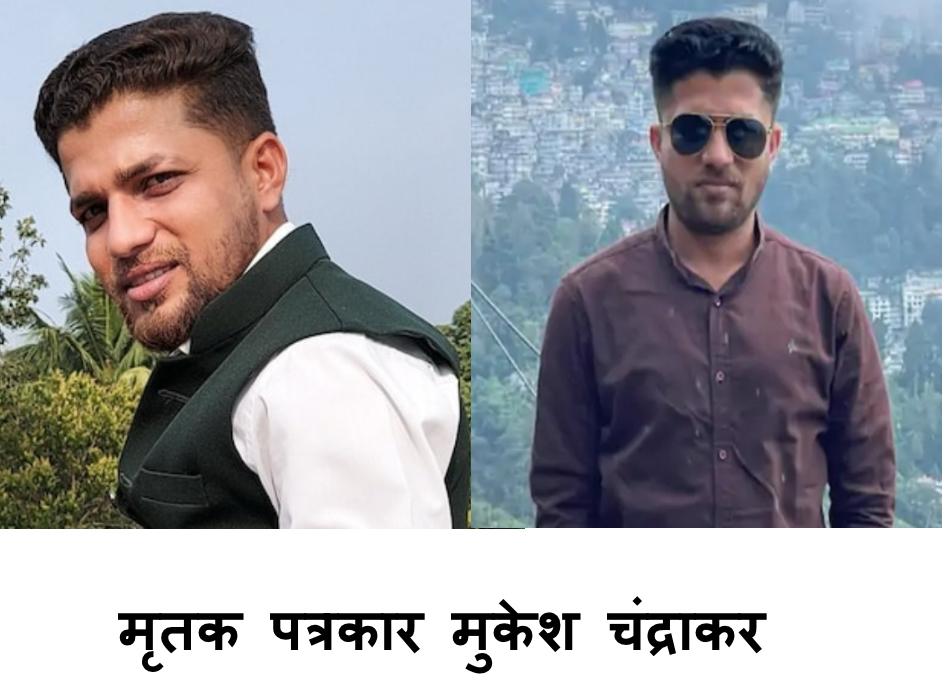
Bijapur, The brutal murder of young journalist Mukesh Chandrakar in Bijapur district of Chhattisgarh has not only highlighted the growing challenges in the field of journalism but has also raised serious questions on the safety of journalists who raise their voice against corruption. Mukesh Chandrakar, who was the editor of 'Bastar Junction' YouTube channel and a freelance journalist, was missing since the evening of January 1. His body was recovered from a septic tank in the premises of contractor Suresh Chandrakar.
Mukesh Chandrakar had recently reported corruption in the road construction being built at a cost of Rs 120 crore. He had exposed the flaws and potholes in the road construction between Gangalore and Hirauli. After his reporting, administrative pressure increased on contractor Suresh Chandrakar, due to which the contractor, angry with his brothers and other associates, conspired to kill him.
The deceased's brother said that Mukesh was last seen with Ritesh Chandrakar on the evening of January 1. The police began an investigation based on the last location of Mukesh's phone, which led to suspicion in Suresh Chandrakar's premises. When journalists and police broke the septic tank, Mukesh's body was found in it.
According to the postmortem report, Mukesh was first strangled and then attacked with an axe. The police have arrested Suresh Chandrakar's two brothers and an associate in this case, but the main accused Suresh Chandrakar is still absconding.
Contractor Suresh Chandrakar has been made the main accused in the murder case of journalist Mukesh. Ritesh Chandrakar, Dinesh Chandrakar and Ramteke involved in the murder have been arrested. Suresh, who was earlier an SPO, became a millionaire through contracting and made a strong hold with political parties. He did big advertisements and social work to improve his image in the society, but absconded after the murder. Stories of his status like his wedding procession in a helicopter and farewell in a BMW car were in the news. Now the police is searching for him and his arrest is expected soon.
Mukesh Chandrakar worked in a challenging area like Bastar, which is considered a stronghold of Naxalism. Through his journalism, he raised the problems of the tribal community, administrative corruption, and local issues at the national level. His brother said, "Mukesh was a real hero who gave his life for the truth."
Mukesh's life was full of struggles. He studied while working in a garage in his childhood and started journalism along with his brother. He was known as a place and helper for journalists from Raipur to Bijapur.
The murder of Mukesh Chandrakar shows that journalism is not just a profession, but a risky mission. Journalists who expose the truth of corruption, crime and power often have to face threats, attacks and even murder. In India, especially in rural and backward areas, journalists have to fight not only political and economic forces but also face social pressure and insecurity. In areas like Bijapur, it is extremely difficult to work amidst Naxalism and corruption.
After the murder of Mukesh Chandrakar, the Chief Minister of Chhattisgarh has ordered an inquiry into the incident and has assured to arrest the culprits soon. But this incident gives rise to a serious debate on the safety of journalists and freedom of expression.
The murder of journalist Mukesh Chandrakar has been condemned by many journalist organizations of the country. National President of Indian Council of Press, S N Vishwakarma, while reacting to this heinous murder, has called it an attack on the journalism world and has demanded the harshest punishment, or even death penalty, for its culprits. He has also demanded from the central and state governments to make proper arrangements for the safety of journalists. He has also said that the organization will soon start a campaign in this regard.
Today, when there is a great need for unbiased journalism to strengthen the roots of democracy, the increasing attacks on journalists are not only weakening democracy but also trying to suppress the truth. The murder of Mukesh Chandrakar reminds us of the objectives of journalism where one has to risk his life to bring out the truth. His death is not just the murder of an individual but an attack on democratic values. Society, administration and media institutions will have to jointly ensure the safety of journalists so that the voices of truth are never stifled.