 India
India
 World
World
 Entertainment
 Sports
 Chhattisgarh
 Haryana
 Delhi
Delhi
 Religious
 Business
 Tech & Auto
 Education
 Health
 Andhra Pradesh
 Telangana
 Sikkim
 Odisha
 Jharkhand
 Assam
Assam
 Nagaland
Challan issued for Bihar CM Nitish Kumar's vehicle
Validity of pollution certificate expired
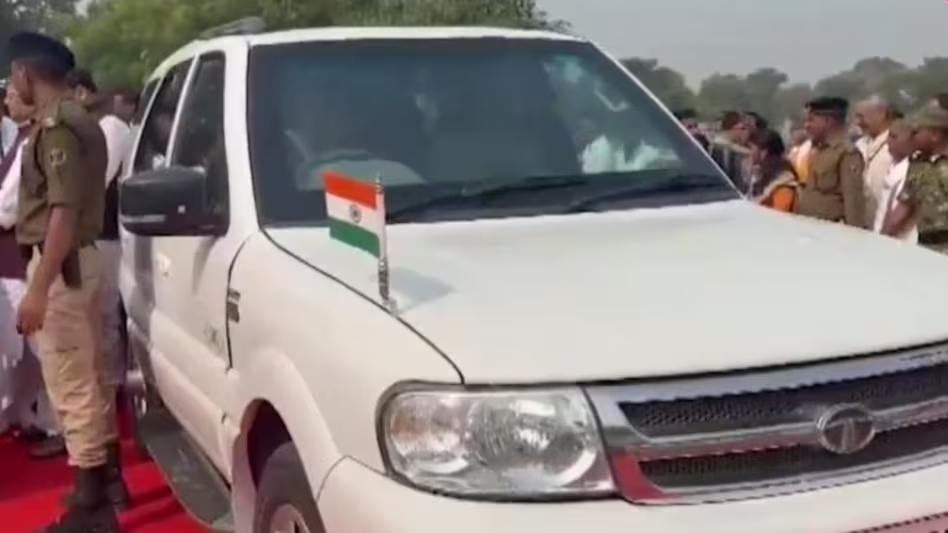
Rohtas, Bihar Chief Minister Nitish Kumar's government vehicle, numbered BR01CL.., has been found violating the rules. The pollution certificate of this vehicle has expired on 3 August 2024, but despite this the vehicle is running on the roads. This information came to light when the Chief Minister reached Kushi Betiya village of Kargahar block of Rohtas district to attend the death anniversary of DM Dinesh Kumar Rai's father.
Case of ignoring old rules
This is not the first time that the Chief Minister's vehicle has been found violating the rules. Earlier on 23 February 2024, a challan of Rs 1000 was deducted for not wearing the seat belt of this vehicle, but till now this fine has not been deposited. In such a situation, the question arises that the person who is responsible for law and order and following the rules in the state has been ignoring the rules for many months.
Questions on Transport Department's campaign
The Transport Department is running a vehicle checking campaign across the state. Under this campaign, if any paperwork is found missing in the vehicles of the general public, a challan is issued immediately. But will a fine be imposed against the Chief Minister despite his vehicle failing the pollution test? This question has become a topic of discussion among the public. RJD leaders targeted
Reacting to this issue, RJD leader Vimal Kumar said, "It is Bihar's misfortune that the Chief Minister's own vehicle has failed the pollution test, while he is getting the common people oppressed by imposing unnecessary fines on them. The papers of government vehicles of many ministers of the state will also be found incomplete. This exposes the claim of good governance.
What will be the next step?
Now it is important to see whether the Transport Department takes action on the Chief Minister's vehicle or not. If the Chief Minister's vehicle is not fined, it will raise questions on the seriousness of the government towards the law and rules in the state. This incident has sparked a debate on the compliance of rules in the state and the way they are implemented. The question resonating among the public is whether the rules are made only for the common people?