 India
India
 World
World
 Entertainment
 Sports
 Chhattisgarh
 Haryana
 Delhi
Delhi
 Religious
 Business
 Tech & Auto
 Education
 Health
 Andhra Pradesh
 Telangana
 Sikkim
 Odisha
 Jharkhand
 Assam
Assam
 Nagaland
Ceasefire broken in three months
US-Iran military confrontation raises global economic and security concerns
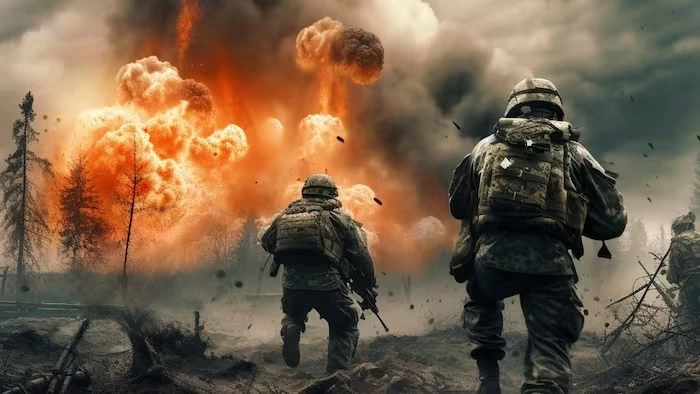
It is important to clarify that there was no comprehensive and formal, permanent peace agreement between the US and Iran. In recent months, a limited de-escalation and a ceasefire-like situation had been established between the two countries. However, this arrangement broke down in the first week of July 2026, and military confrontation between the two countries resumed. According to available international reports, the situation deteriorated within approximately three months. The US alleged that Iran-backed groups and Iranian military activities endangered international maritime trade in the Persian Gulf, and especially the Strait of Hormuz. The US administration stated that military action became necessary after attacks on several commercial ships and oil tankers and the targeting of US interests. Based on this, the US launched airstrikes on Iranian missile bases, military bases, and strategic installations.
On the other hand, Iran rejected these US allegations, stating that it had not violated any agreement, but rather that the US continued to impose military pressure, economic sanctions, and regional interference against it. Iran claims that its The steps were taken for self-defense and to protect its sovereignty. The Iranian leadership says that if it did not respond, both its national security and regional influence would be weakened. That is why it decided to respond to the American action and after this the tension between the two countries increased rapidly. The biggest reason for America's displeasure was the Strait of Hormuz, through which about one-fifth of the world's maritime oil trade passes. If insecurity increases on this route, the energy supply of the entire world could be affected. America says that Iran's activities have endangered not only American interests but also the energy security of Europe, Asia and Gulf countries. Whereas Iran argues that America itself is creating tension by increasing its military presence in the region and that is the real cause of the conflict. This entire development has sent a message to the world that peace in the Middle East remains highly unstable, and that a small military dispute could escalate into a major regional conflict at any time. It has also become clear that the global economy remains highly dependent on energy supplies and maritime trade routes. If a crisis deepens along strategic routes like the Strait of Hormuz, its impact is not limited to the countries involved but impacts the global economy. This development is also considered a matter of concern from a trade and industry perspective. Following the escalation of tensions, crude oil prices in the international market have seen a surge. If the conflict continues for a long time, petrol and diesel prices could rise, sea freight rates could become expensive, ship insurance premiums could increase, and global supply chains could be disrupted again. Oil-importing countries like India, Japan, South Korea, and Europe could be most affected, as a large portion of their energy needs are met from West Asia. This is also expected to lead to rising inflation, increased industrial costs, and instability in global stock markets. In responses from world leaders, most countries have appealed for restraint and a negotiated solution. Gulf countries have expressed concern about the possibility of a war in the region. Expressing fears of escalation, both sides have been urged to immediately stop military action. European countries have also said that increasing tension will affect both the global economy and international security. The United Nations has also appealed to both countries to resume talks and adopt a diplomatic solution. US President Donald Trump stated that if US troops, allies, or international maritime trade are threatened, the US will respond strongly. He also stated that the US does not seek conflict but will take all necessary steps to protect its security and that of its allies. Meanwhile, Iranian President Masoud Pezeshkin described the US actions as a violation of international law and stated that Iran will respond with all possible measures to defend its sovereignty and national security. He also stated that if the US ceases military action, it could open the door to diplomatic dialogue, but that negotiations are impossible amid pressure and attacks. Overall, the current situation indicates that both countries do not want an open and prolonged war, as it would cause significant economic and strategic losses to both. However, if military action and retaliatory attacks continue and insecurity in the Strait of Hormuz increases, the impact will not be limited to the US and Iran, but could also impact global trade, energy markets, stock markets, and ordinary consumers. Therefore, the international community's top priority at present is to ensure that both countries return to the negotiating table and prevent tensions from escalating into a full-scale war.