 India
India
 World
World
 Entertainment
 Sports
 Chhattisgarh
 Haryana
 Delhi
Delhi
 Religious
 Business
 Tech & Auto
 Education
 Health
 Andhra Pradesh
 Telangana
 Sikkim
 Odisha
 Jharkhand
 Assam
Assam
 Nagaland
Ayatollah Ali Khamenei's funeral procession concludes today
Burial to take place in Mashhad
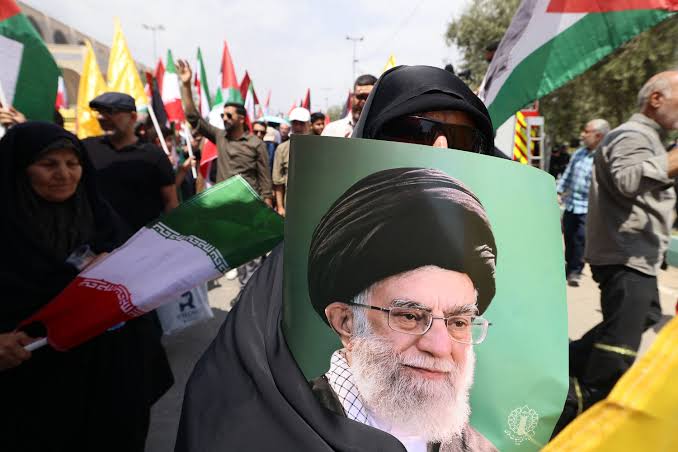
Tehran/Mashhad, The much-hyped funeral procession of former Iranian Supreme Leader Ayatollah Ali Khamenei is reaching its final destination on Thursday, July 9, 2026. After passing through Tehran, Qom, Najaf, and Karbala, his body will be buried in his birthplace, Mashhad, today. This ceremony is considered extremely important for Iran from both religious and political perspectives.
Khamenei will be buried near the Imam Reza shrine in Mashhad, one of the holiest religious sites for the Shia Muslim community. He died during US-Israeli airstrikes in February 2026. Subsequently, his son, Ayatollah Mojtaba Khamenei, was elected the country's new Supreme Leader. Due to security and wartime circumstances, the funeral was held several months later.
The funeral procession lasted six days.
According to reports, the funeral procession began on July 4th in Tehran, where millions of people paid their respects. Following this, the funeral processions were held in various cities. A special memorial service was held in Qom on July 7th, while religious ceremonies were also held in the Iraqi holy cities of Najaf and Karbala on July 8th, attended by a large number of Shia pilgrims.
The six-day procession will conclude today with the funeral in Mashhad. Iranian authorities have deployed unprecedented security throughout the event. Traffic was controlled on many routes and additional security forces were deployed in sensitive areas.
Funeral also carries a political message.
Khamenei, Iran's supreme leader for nearly four decades, had a profound political and religious influence on the country's governance. The large turnout at his funeral, coupled with anti-American slogans, is being presented by the Iranian leadership as a demonstration of national unity. Experts believe the event will also serve as an important political message for the new leadership.
This day will be etched in Iran's history.
Khamenei's funeral is being seen not only as a religious ritual but also as the closing of an important chapter in Iran's political history. His burial in the holy city of Mashhad is seen as a symbolic step linked to the country's religious and political heritage. With the funeral, Iran is moving towards new leadership and a new political direction, a process that is being closely watched by the entire world.