 India
 World
 Entertainment
 Sports
 Chhattisgarh
 Haryana
 Delhi
 Religious
 Business
 Tech & Auto
 Education
 Health
 Andhra Pradesh
 Telangana
 Sikkim
 Odisha
 Jharkhand
 Assam
 Nagaland
Human-Elephant Conflict to be Mitigated
Forest Personnel Learn Modern Elephant Management Techniques in West Bengal
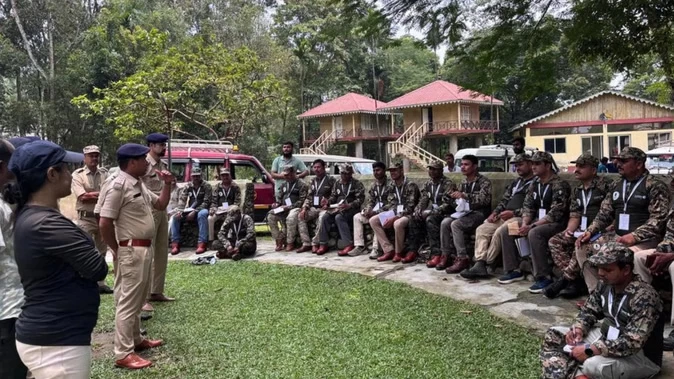
Amidst the challenges posed by the increasing presence of wild elephants and the resulting human-elephant conflict in Bandhavgarh Tiger Reserve, the Forest Department has taken a significant step towards enhancing management effectiveness. As part of this initiative, 30 forest personnel from the Madhya Pradesh Forest Department participated in a six-day special training program in West Bengal, where they received practical training in modern techniques for wild elephant management and the prevention of human-elephant conflict.
Forest guards Lavkesh Prasad Kushwaha, Dhirendra Shukla, Kailash Chaudhary, Lavkesh Gupta, and Ravi Kumar Verma represented Bandhavgarh Tiger Reserve in this program. During the training, all participants conducted an in-depth study of elephant behavior, management practices, and various aspects of handling conflict situations. Northern West Bengal is one of the regions in the country where human-elephant conflict has long been a serious challenge; consequently, the management systems and techniques developed there are considered valuable for forest departments across the nation. The training provided practical experience in key methods, such as operations to safely drive elephants from inhabited areas back into the forest, transect surveys, monitoring via dung analysis, identifying elephant behavior, managing camp elephants, and profiling elephants based on their physical characteristics.
A notable highlight of the training was the opportunity for participants to interact directly with IFS officers, forest staff, wildlife squads, quick response teams, and local community representatives from the Gorumara, Kurseong, Baikunthapur, and Jalpaiguri forest divisions. Detailed discussions were held on strategies for maintaining law and order during conflict situations, ensuring local community participation, and executing rapid responses during emergencies.
It is worth noting that wild elephants have been regularly frequenting the Bandhavgarh Tiger Reserve for approximately the last eight years. This region has now evolved into a permanent habitat for elephants, a fact considered indicative of a healthy ecosystem. However, the increased movement of elephants also raises concerns regarding crop damage and incidents of human-elephant conflict in villages adjacent to the reserve.
The Forest Department believes that the experience and technical knowledge gained from this inter-state training will play a crucial role in the future management of elephants in the Bandhavgarh region, ensuring the safety of villagers and mitigating human-elephant conflict. This initiative is also expected to yield positive results in striking a balance between wildlife conservation and the interests of local communities.