
 India
India
 World
World
 Entertainment
 Sports
 Chhattisgarh
 Haryana
 Delhi
Delhi
 Religious
 Business
 Tech & Auto
 Education
 Health
 Andhra Pradesh
 Telangana
 Sikkim
 Odisha
 Jharkhand
 Assam
Assam
 Nagaland
13 killed in Peru plane crash
A trip to the Nazca Lines, a site of 'alien' mystery, turned into their final journey
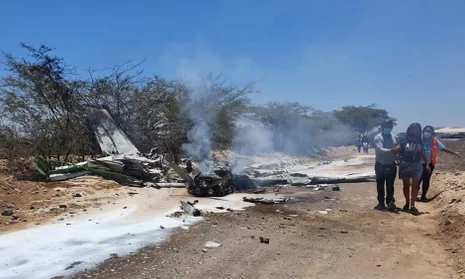
A trip for tourists to see the aerial view of Peru's world-famous Nazca Lines turned into a tragic accident on Saturday. A small plane carrying tourists crashed into a field near the town of Nazca in southern Peru. The accident killed all 13 people on board. The deceased included 11 tourists and two pilots.
According to local authorities, the crashed plane belonged to Aerodiana Airlines, which was on a sightseeing flight over the Nazca Lines. The plane suddenly crashed during the flight. The cause of the crash is currently unknown, and the identities of the deceased have not been released.
What are the Nazca Lines?
The Nazca Lines are among the world's most mysterious archaeological sites. Centuries ago, indigenous communities created these massive figures by removing the ground surface in the Peruvian desert. These include huge images of birds, monkeys, spiders, and various geometric shapes, all of which can only be fully seen from the sky. These mysterious figures have sparked numerous discussions, and some even link them to alien theories. The site is listed as a UNESCO World Heritage Site, and thousands of tourists visit it annually in small aircraft for aerial viewing.
How did the accident happen?
Police officer Jorge Andrade said the plane was flying over the Nazca Lines when it lost control and crashed into a nearby field. The crash was so severe that none of the people on board were likely to survive. According to preliminary information, four bodies have been recovered, while a search and rescue operation is underway to retrieve the remaining bodies. The accident occurred around 1 pm local time. The plane took off from Pisco Airport.
Similar accidents have happened before
This is not the first major accident involving tourist flights operating over the Nazca Lines. In 2022, a tourist plane crashed, killing seven people. Another plane crash in 2010 resulted in the deaths of six people. These frequent incidents have once again raised serious questions about the safety and monitoring of tourist flights.